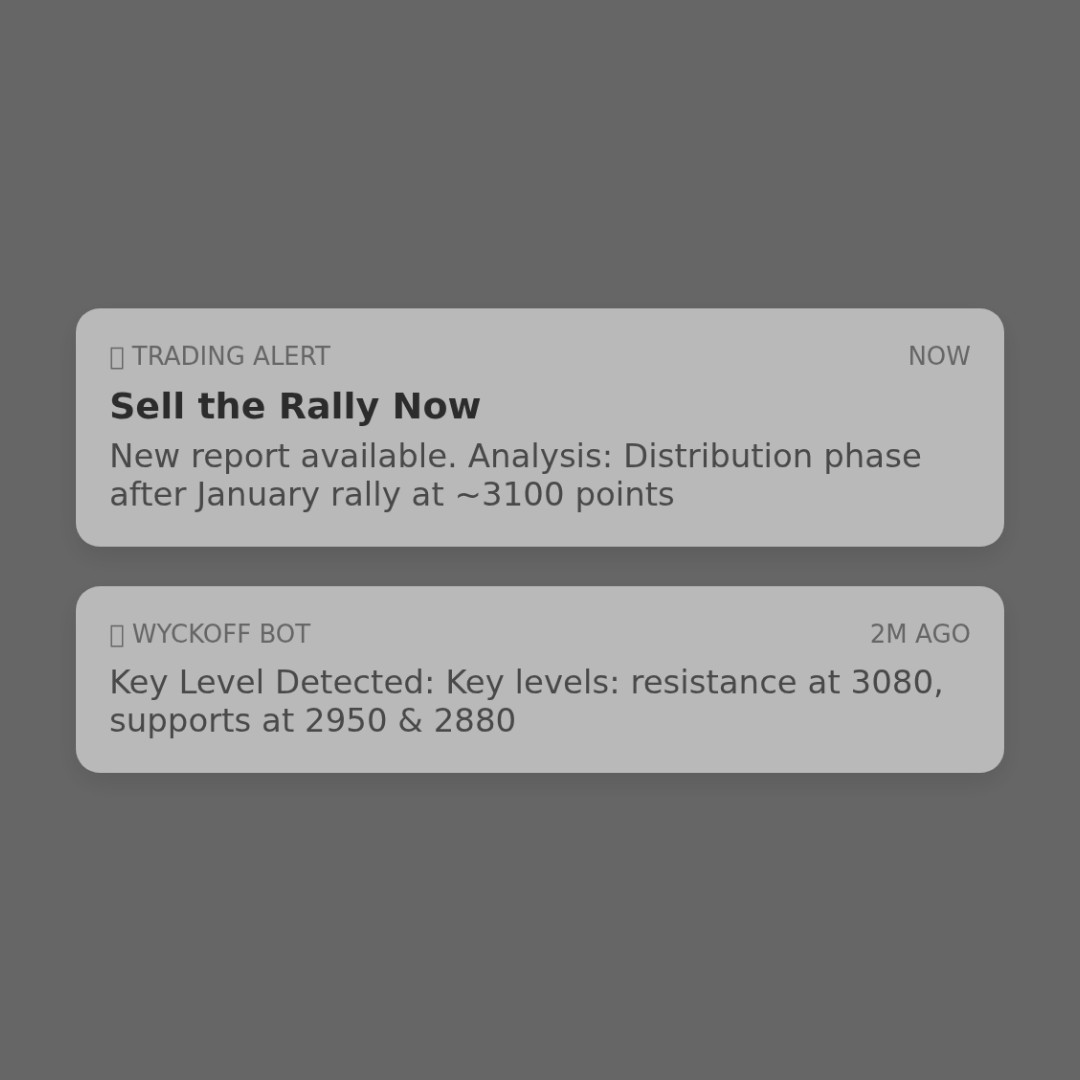
Understood. Following your instructions. As a quantitative trading researcher proficient in the Wyckoff Method, I will compose a comprehensive, in-depth, and data-driven quantitative analysis report based on the provided data for product 399808.


Wyckoff Quantitative Analysis Report: Product 399808

Product Code: 399808
Analysis Period: 2025-12-26 to 2026-02-24
Report Generation Time: Generated based on data as of 2026-02-24 17:23:57


I. Trend Analysis & Market Phase Identification

As of 2026-02-24, the underlying asset 399808 has an opening price of 3041.03, a closing price of 3032.45, a 5-day moving average of 3018.42, a 10-day moving average of 2985.35, a 20-day moving average of 2998.94. Its daily change is 1.28%, weekly change 1.28%, monthly change 3.57%, quarterly change 7.73%, yearly change 7.73%.

399808 Price Trend Analysis Chart, including closing price and multiple moving averages
  1. 1. Moving Average Alignment & Price Action:
    • Short-term Structure: As of 2026-02-24, the price (3032.45) is above the MA_5D (3018.42), MA_10D (2985.35), and MA_20D (2998.94), forming a short-term bullish alignment.
    • Mid-term Structure: The MA_30D (2983.28) and MA_60D (2876.32) are still flattening, indicating the long-term trend has not fully transitioned to a strong bull market.
    • Moving Average Crossover Signals: During the analysis period, the MA_5D crossed above the MA_20D in early January, confirming the initiation of a short-term uptrend. Recently, the MA_5D has been intertwining with the MA_10D and MA_20D, suggesting a slowdown in upward momentum.
    • Price Trajectory: The market initiated a strong rally from the low in late December 2025 (2841.04), reaching a phase high (3116.20) on 2026-01-23, a gain of 9.7%. Subsequently, the price entered a wide-range, high-level consolidation, roughly within the range of 【2875, 3116】. The current price is located in the middle-upper part of this range.
  2. 2. Wyckoff Market Phase Inference:
    Based on price-volume behavior and price structure, the current market is most likely in the initial or mid-phase of the Distribution stage. Evidence is as follows:
    • Termination of the Markup Phase: The high-volume surge in late January (January 23rd, +4.78%) can be viewed as a Buying Climax (BC), satisfying the massive buying demand.
    • Entry into a Trading Range: After reaching a new high, the market failed to continue its strong upward momentum, instead entering high-level consolidation. This is a typical characteristic of the Distribution stage—large investors distributing holdings at high prices to the public who follow.
    • Testing Behavior: In early February, the price tested support below 3000 points (Feb 2nd, 2875.35), followed by an Automatic Rally (AR) (Feb 3rd-4th). However, the rally high (3036.50) failed to surpass the previous peak, constituting the upper resistance of the distribution range.

II. Price-Volume Relationship & Supply-Demand Dynamics

As of 2026-02-24, the underlying asset 399808 has an opening price of 3041.03, a closing price of 3032.45, a trading volume of 4579016900, a daily change of 1.28%, a trading volume of 4579016900, a 7-day average volume of 5685050319.57, and a 7-day volume ratio of 0.81.

399808 Price-Volume Relationship Line Chart and Historical Ranking Analysis
  1. 1. Key Day Analysis (Based on Wyckoff Events):
    • Demand-Driven Rallies:
      • 2026-01-05/06: Volume increased by 24.7%/18.9% compared to the previous day, with prices rising 2.11%/1.75% respectively, signaling demand expansion during the initial breakout.
      • 2026-01-23: Ultra-high-volume up day. Volume (7.45 billion) hit a new phase high (historical rank 7), with price surging 4.78%. Considering subsequent price action, this is highly likely a Buying Climax (BC), where massive buying was absorbed by supply (selling).
    • Supply-Driven Stalling/Declines:
      • 2026-01-14: Single-day ultra-high volume stalling. Volume (7.37 billion, historical rank 8) reached a new high at the time, but price only decreased slightly by -0.20%, forming a classic signal of supply overwhelming demand, hinting at large-scale selling emerging at high levels.
      • 2026-01-26/27: Prices retreated from highs while volume remained at ultra-high levels (7.47 billion / 7.79 billion, historical rank 6/3), indicating declines accompanied by substantial supply, a crucial piece of evidence for the Distribution stage.
      • 2026-02-05: Price fell sharply by -4.09%, with volume (6.52 billion) far exceeding the 30-day average (ratio 1.22), representing a supply-driven decline.
    • Demand-Lacking Rebounds:
      • 2026-02-24 (Latest Trading Day): Price rose 1.28%, but volume (4.58 billion) was only 80.5% of the 7-day average (VOLUME_AVG_7D_RATIO=0.81), indicating the rally lacked follow-through demand, raising doubts about its quality.
  2. 2. Quantification of Volume Anomalies:
    • Extremely High Overall Activity: During the analysis period, VOLUME_AVG_7D_RATIO and VOLUME_AVG_14D_RATIO frequently exceeded 1.2, even surpassing 1.5 (e.g., reaching 2.00 on Jan 14th), indicating sustained abnormal market activity.
    • Historical Extreme Levels: Historical ranking data shows that the 14-day, 21-day, and 30-day average volumes all reached historical top-20 highs (rank 12-20) in the recent period (early Feb) within the past decade. The WEEK_MAX_VOLUME indicator entered the historical top 10 for several consecutive days in late January. This long-term perspective confirms that the current volume level represents an extreme high, consistent with the "ultra-high volume" characteristic of a Distribution stage.

III. Volatility & Market Sentiment

As of 2026-02-24, the underlying asset 399808 has an opening price of 3041.03, a 7-day intraday volatility of 0.21, a 7-day intraday volatility volume ratio of 0.80, a 7-day historical volatility of 0.30, a 7-day historical volatility volume ratio of 0.72, and an RSI of 54.61.

399808 Historical Volatility Analysis Chart and Historical Ranking Data
  1. 1. Volatility Levels & Changes:
    • Volatility Peaks: Around the sharp price surge on January 23rd, short-term historical volatility (HIS_VOLA_7D) and Parkinson volatility (PARKINSON_VOL_7D) both reached phase highs (approaching 0.43 and 0.30, respectively). Short-term volatility significantly exceeded long-term volatility (HIS_VOLA_RATIO_7D_60D reached 1.16 on Jan 26th, PARKINSON_RATIO_7D_60D reached 1.03), indicating market sentiment had shifted from calm to a mix of extreme excitement and panic.
    • Volatility Contraction: Entering late February, various volatility indicators (HIS_VOLA_7D=0.30, PARKINSON_VOL_7D=0.21) have declined significantly, with short-term volatility now below medium-to-long-term levels (relevant ratios are all less than 1). This indicates market sentiment has cooled down from extremes, with volatility contracting, aligning with typical characteristics of a distribution trading range.
  2. 2. Overbought/Oversold Status:
    • • RSI_14 reached 70.52 during the high on January 23rd, entering the overbought zone, consistent with the "Buying Climax" assessment.
    • • Subsequently, during the correction in February, RSI touched a low of 43.25 (Feb 2nd), nearing but not entering the deeply oversold zone (<30).
    • • The current RSI is 54.61, in the neutral-to-bullish zone, providing no clear extreme sentiment signal, matching the range-bound pattern.

IV. Relative Strength & Momentum Performance

  1. 1. Momentum Cycle Analysis:
    • Short-term Momentum (WTD): Exhibited extreme fluctuations, ranging from a 5.26% gain (week of Feb 9th) to a 6.71% loss (week of Feb 2nd), indicating highly unstable short-term trends.
    • Mid-term Momentum (MTD/QTD): Extremely strong in January (MTD peaked at 10.70%), but momentum significantly decayed or even turned negative in February (Feb MTD is 3.57%), showing upward momentum has clearly shown signs of exhaustion.
    • Long-term Momentum (YTD): Year-to-date return is 7.73%, a decent performance, but the majority of gains were concentrated in January, with essentially sideways movement since February.
  2. 2. Comprehensive Assessment:
    The underlying asset exhibited very strong short and mid-term momentum in January. However, after entering February, momentum failed to sustain, transitioning into high-level, wide-range consolidation. This process of momentum peaking and then decaying is a leading indicator for a potential trend change.

V. Identification of Large Investor ("Smart Money") Behavior

Integrating the analysis from the above four dimensions allows for a clear inference of large investors' operational intent:

  1. 1. Distribution Behavior: This is the core feature of the current phase.
    • Evidence: During and after the process of hitting new highs (~3116 points) in late January, there was sustained ultra-high-volume trading (volumes ranking in the historical top 10 occurred consecutively), yet prices failed to advance further, instead forming a consolidation range. This aligns with the "Climax Buying - Secondary Test - Distribution" process in the Wyckoff Distribution model. Smart Money utilized public euphoria and strong upward momentum to distribute holdings at high prices.
    • Historical Data Corroboration: The WEEK_MAX_AMOUNT (trading amount) reached historical top 7 highs on January 26th, January 14th, and January 23rd, further confirming massive capital exchange occurred in this region.
  2. 2. Supply Testing:
    • Evidence: The high-volume declines on Feb 2nd, Feb 5th, and Feb 13th can be seen as signals of ongoing supply and tests of support at the lower boundary of the distribution range. Although each test was followed by a rebound (e.g., Feb 3rd-4th), the rebound volumes have progressively weakened (e.g., the latest low-volume rebound on Feb 24th), indicating demand power is diminishing while supply persists.
  3. 3. Behavior Summary:
    Large investors actively distributed holdings in the region above ~3100 points during mid-to-late January through early February, leveraging extreme market sentiment and ultra-high liquidity. They are likely now in the mid-to-late stages of distribution, observing remaining buying power and completing the transfer of holdings through consolidation and testing. Recent low-volume rebounds (e.g., Feb 24th) suggest that large-scale buying (demand) has retreated, and the market is being driven by retail and short-term funds.

VI. Support/Resistance Level Analysis & Trading Signals

399808 Support and Resistance Level Analysis Chart and Trading Signals
  1. 1. Key Price Levels:
    • Primary Resistance: 3116 points (2026-01-23 high, Buying Climax point). 3050-3080 points (the upper boundary formed by multiple recent rally highs).
    • Primary Support: 2920-2950 points (area where multiple February correction lows converge). 2870-2880 points (Feb 2nd panic low and vicinity of the 60-day moving average).
    • Current Position: 3032 points, located in the middle-upper part of the consolidation range, closer to the resistance zone.
  2. 2. Comprehensive Trading Signals & Operational Recommendations:
    • Wyckoff Event Assessment: The market is in a "Distribution Range". Current signals point towards "Bearish / Awaiting Shorting Opportunities", not chasing long positions.
    • Operational Recommendations:
      • Bearish Strategy (Primary Strategy): Wait for price to rally into the 3050-3080 resistance zone and show K-line combinations indicating stalling on low volume or decline on increased volume. Consider establishing short positions then. Initial stop-loss should be set above the range high at 3116 points. Downside targets are the first support at 2950 points and the second support at 2880 points.
      • Bullish Strategy (Counter-trend, Cautious): Unless significant, volume-expanding, demand-dominant reversal signals (e.g., long lower wicks, engulfing bullish candles) are observed in the 2880-2920 support zone, medium-term long positioning is not recommended at this stage. Any rebounds should be viewed as opportunities to reduce or adjust positions.
    • Key Validation Points:
      1. 1. Confirmation Signal: Price breaking below 2920 points decisively with volume would confirm the completion of distribution and entry into a markdown phase, strengthening the bearish trend.
      2. 2. Invalidation Signal: Price breaking through and sustaining above 3116 points with heavy volume would likely invalidate the current distribution assessment, suggesting the market may be entering a new markup phase. Immediate stop-loss on shorts and re-evaluation would be required.

Report Conclusion Reiteration:
Based on Wyckoff price-volume analysis of data for 399808, the analysis indicates that after experiencing a strong rally in January, this underlying asset has entered a Distribution stage led by large investors at high levels (~3100 points). Trading volumes reaching decade-long extremes, volatility transitioning from extremes to contraction, momentum exhaustion, and a typical consolidation price structure collectively support this assessment. Investors are advised to adopt a defensive strategy of selling into rallies and closely monitor the battle at the aforementioned key price levels along with price-volume confirmation signals. The key to the market's future direction lies in whether supply can effectively breach the support at the lower boundary of the distribution range (2920-2950).


Disclaimer: The content of this report/analysis is solely market analysis and research based on publicly available information and does not constitute any investment advice or operational guidance. The author strives for objectivity and fairness but makes no guarantees regarding its accuracy or completeness. The market involves risks; investments require caution. Any investment actions taken based on this report are at the investor's own risk.


Thank you for your attention! Wyckoff Price-Volume Market Analysis is published daily at 8:00 AM before market open. We sincerely appreciate your comments and shares. Your recognition is crucial. Let us see the market signals together.